From Lab to Life: A Chat With Dr. Linda Dokas on Family, Research, and Hope (Interviewed by Melinda Riccitelli)
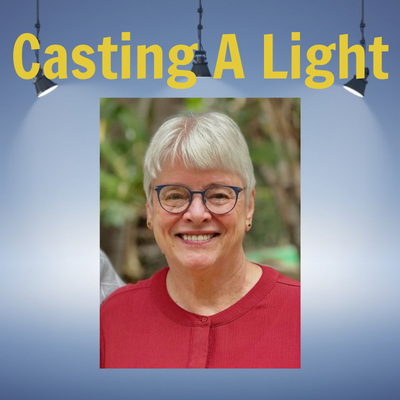
Melinda: Linda, can you start by telling us a bit about your background and how you got connected with the CCHS Network?
Linda: Sure! My graduate and postdoctoral training were at the University of Michigan. My interest in Neuroscience began under the mentorship of Dr. Bernie Agranoff when I was a postdoctoral fellow in his laboratory. For approx. 30 years, I served as a faculty member at the Medical College of Ohio, followed by a research position at the University of Michigan. After my grandson, Henry, was born with CCHS, I decided to end my academic career and join the CCHS Network. I wanted to use my scientific expertise in a very personal way while promoting research into the biology of CCHS.
Melinda: What made you want to step into the role of Chair of the Science Advisory Committee?
Linda: I initially was a member of the Research Advisory Board whose principal function was to review and recommend grant applications to the CCHS Network for funding. I subsequently worked with Dr. Eddy Yang as Co-Chair of the group and then as Chair. The CCHS Network now needs to engage in a broader range of activities to fully realize its scientific mandate. I look forward to serving as Chair of the Scientific Advisory Committee to play my part in the evolution of the CCHS Network.
Melinda: For people who aren’t as familiar, how would you describe the main purpose of the Science Advisory Committee?
Linda The core mission of the Scientific Advisory Committee is multi-faceted but cohesive. The major components include funding of basic, translational, and clinical research grants; establishment of research networks; and support of innovations that advance effective treatments or lead to a cure for CCHS. The Committee is guided by research priorities aligned with community needs. While ensuring scientific integrity and rigor, it fosters collaboration and data sharing. It advises the CCHS Network on research policy and long-term strategy and regularly reviews the scientific literature to ensure the CCHS Network’s understanding of CCHS is informed by the latest findings.
Melinda: How do you and the team decide which research proposals to fund?
Linda: Evaluation of research proposals is and will continue to be based on two major standards: scientific merit and relevance to CCHS. But there will be a more prominent emphasis on funding research of a translational/clinical nature. This is consistent with a renewed commitment to find better treatments and, into the future, a cure for this rare disorder.
Melinda: Are there any recent wins or projects you’re especially proud of?
Linda: Definitely! The existing grant review panel has consistently funded international research of high scientific merit year after year – I am proud of that. This highlights the global nature of the CCHS Network and its ability to bring together voices from around the world. Also, the Science Conference in 2023 brought our awardees and many other researchers together, a singular accomplishment in the history of the CCHS Network.
Melinda: Can you give an example of a CCHS research project that’s made a big impact?
Linda: Over the years, the CCHS Network has funded several researchers in the Department of Pharmacology at the University of Virginia headed by Dr. Doug Bayliss. Their research has discovered the cellular mechanism by which the retrotrapezoid nucleus (RTN) in the brainstem senses CO2. This is the critical function that is impaired by mutations in the Phox2b gene, the defining criteria for CCHS. Recently, Dr. Bayliss, and his collaborator, Dr. Yingtang Shi, have leveraged their CCHS funding into a $3 million grant from the NIH to study Phox2b-regulated genes that impact breathing.
Melinda: Looking to the future, what kinds of research do you think holds the most promise?
Linda: I see convergence in the research projects that we fund. This is only possible when a sufficient level of knowledge into central control of respiration has developed. When researchers can build on one another’s findings, a synergism emerges that speeds up the understanding of CCHS pathology. In my opinion, this increases the rationale for and potential impact of translational and clinical approaches to CCHS.
Melinda: What keeps you motivated in this work?
Linda: It’s personal – watching my grandson live his life as any 9-year-old would is very rewarding, a situation that is only possible because of advances in CCHS care. My hope comes from my awareness of the quality of the basic research that is funded by the CCHS Network. This knowledge will undoubtedly lead to fuller understanding of the cellular effects of a Phox2b mutation and lead the way to therapeutic treatment.
Melinda: What’s something about you that might surprise people?
Linda: Given my lifetime experience in science, people might be surprised that I have a strong affinity for the humanities. This interest was sparked by a humanities course I took as a high school senior that was taught by a person who was (and still at the age of 96) a “renaissance man”. His influence has had an indelible effect on my way of thinking.
Melinda: What is a scientific discovery, big or small, that never fails to blow your mind?
Linda: Modification of the genome, especially through CRISPER and base editing technology, is now in early stages of medical application. Eventually, these approaches will completely change therapeutic disease treatment.
Melinda: Finally, just for fun – if Hollywood made a movie about the Science Advisory Committee, who would play you and what would the movie title be?
Linda: Hand’s down Helen Mirren! The title would be “Mission Possible”.